Rafael Simmons · 22 September 2026
Copper Alloy Advancements Propel Durability Standards in Metropolitan Public Safety Systems
Metropolitan expansion continues to place new demands on public safety infrastructure, and copper alloy innovations address those demands through enhanced material performance in railings, emergency lighting poles, fire suppression components, and electrical grounding systems. Researchers at materials laboratories have developed alloys that combine copper with controlled additions of nickel, silicon, and chromium, and these formulations deliver improved resistance to atmospheric corrosion while preserving mechanical strength under cyclic loading.
Data collected from installations in growing urban corridors shows that such alloys extend service intervals by factors of two to three compared with traditional grades, which reduces replacement frequency in high-traffic zones. Standards organizations have responded by updating test protocols that measure pitting resistance and stress-corrosion cracking under simulated urban pollutant loads, and these protocols now appear in revised editions released for review in September 2026.
Material Science Behind the Alloys
Engineers have refined precipitation-hardening sequences that produce fine, stable particles within the copper matrix, and the resulting microstructure resists deformation at elevated temperatures encountered during fire events. Laboratory trials conducted across multiple climate chambers confirm that the new alloys maintain yield strengths above 400 MPa after 2,000 hours of salt-spray exposure, whereas conventional C110 copper drops below 300 MPa under identical conditions.
Metropolitan agencies in North America and Europe have begun specifying these grades for pedestrian barriers along transit corridors, and procurement records indicate adoption rates rose steadily through 2025. The alloys also support higher electrical conductivity than many stainless alternatives, which allows thinner cross-sections in grounding grids without compromising fault-current capacity.
Performance in Expanding City Environments
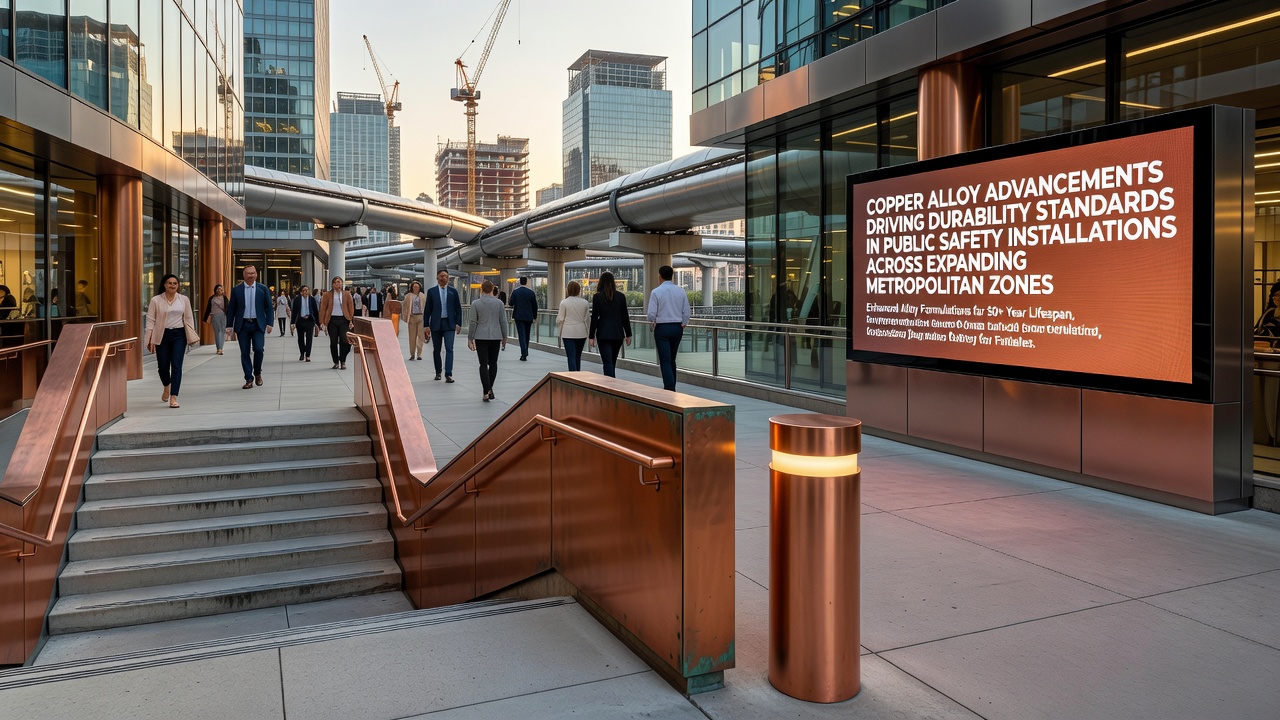
Urban planners integrate the alloys into multi-function street furniture that serves both safety and wayfinding roles, and field monitoring programs track performance across seasonal temperature swings and de-icing chemical exposure. One installation in a mid-latitude coastal city recorded zero visible surface degradation after 48 months, while adjacent carbon-steel elements required coating renewal twice during the same period.
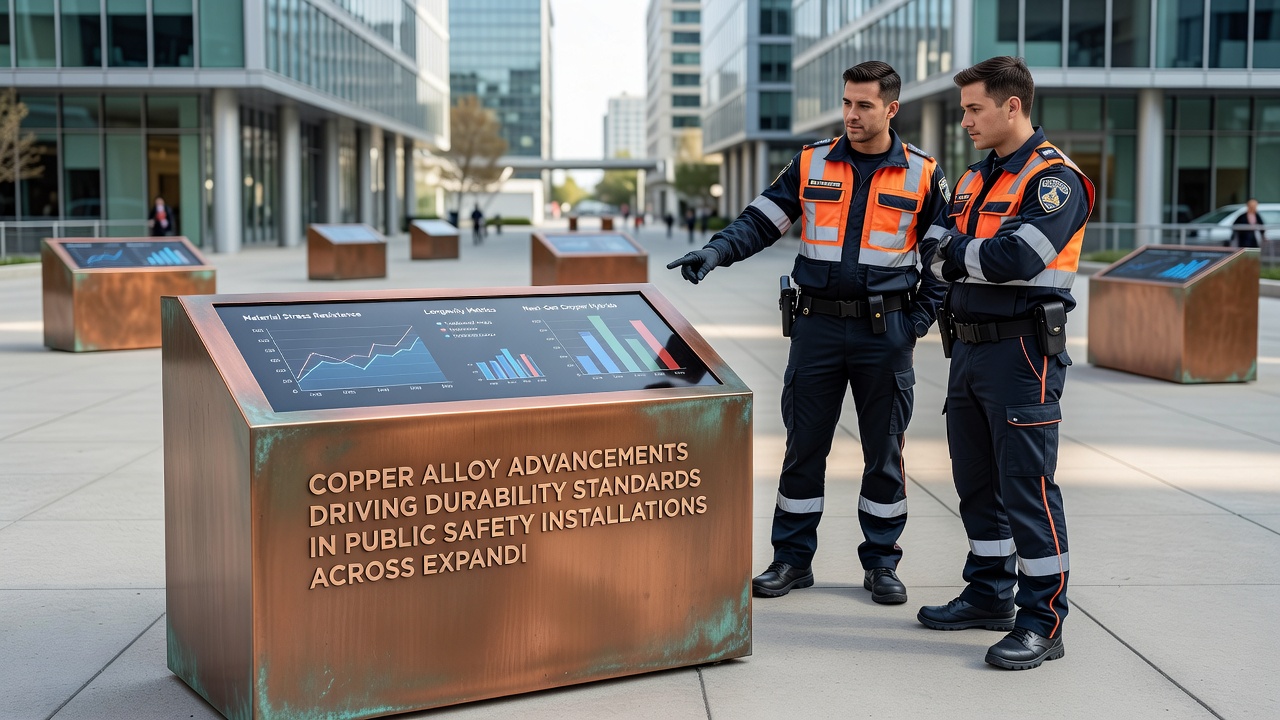
Regulatory bodies such as NIST have published comparative durability matrices that city engineers now reference during design reviews. Those matrices incorporate accelerated weathering data from both temperate and subtropical test sites, and they highlight consistent ranking advantages for the nickel-silicon-copper family over earlier formulations.
Integration with Updated Standards
Standards committees have aligned alloy specifications with ISO 6509 corrosion testing revisions, and certification pathways now require third-party verification of both mechanical and environmental metrics. Municipal specifications in several expanding regions reference these updated documents when tendering contracts for transit hubs and emergency access routes, and bid documents increasingly list minimum pitting-resistance equivalents that favor the newer alloys.
Supply-chain adjustments have accompanied the shift, with mills expanding capacity for controlled-atmosphere casting lines that ensure uniform alloy distribution. Quality audits conducted by independent laboratories report defect rates below 0.2 percent in recent production batches, supporting reliable delivery to large-scale infrastructure projects.
Case Examples from Metropolitan Projects
Transportation authorities in two North American cities replaced aging handrail systems along elevated walkways with the advanced alloys in 2024, and subsequent inspections after winter salt exposure showed no measurable section loss. Similar retrofits in European transit stations incorporated the alloys into emergency egress lighting mounts, and those components maintained dimensional stability through repeated thermal cycling tests mandated by updated building codes.
Researchers tracking lifecycle costs note that the extended replacement intervals offset the modest premium in initial material pricing, and asset-management databases now include projected service-life values derived from the new alloy performance data. The approach aligns with broader infrastructure resilience planning that anticipates continued metropolitan population growth through 2035.
Conclusion
Copper alloy developments continue to reshape durability expectations for public safety installations in expanding metropolitan areas, and the technical data generated through standardized testing supports wider specification of these materials. Ongoing refinement of alloy chemistry and processing routes promises further gains, while updated standards scheduled for final review in September 2026 will formalize performance thresholds that city engineers already apply in current projects.